

Lexus TX vs. Acura MDX
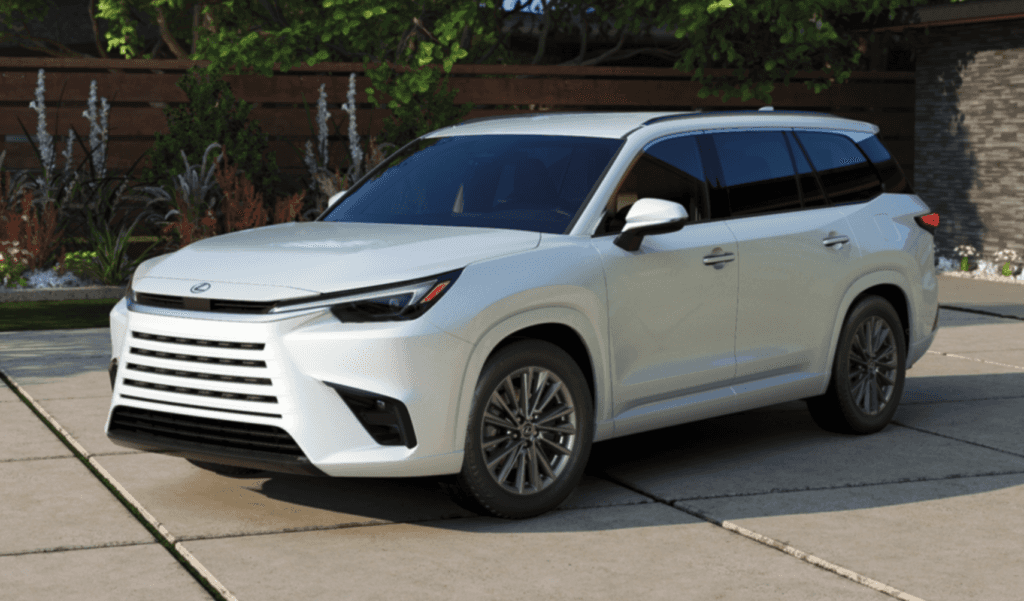
This comparison has been 23 years in the making. It was in 2001 that Acura invented the 3-row crossover with the introduction of the MDX. Until then, having a third row relegated you to either a minivan, full-size van, or large truck-based SUV like the Chevrolet Suburban. The MDX went unanswered by other Asian luxury brands for a surprisingly long time and only recently, Lexus hits the category full-on with the TX, its first dedicated 3-row crossover currently in stock at Lexus of Las Vegas. So how does the Lexus newcomer compete with the segment creator?
Drivetrain
The original MDX was powered by a 3.5-liter V-6, and three generations later little has changed. Most current MDX models are still powered by the same 3.5-liter V6 though enhancements over the years have raised the power from 240 to 290 horsepower. The engine is combined with a 10-speed transmission, doubling the amount of gears of the original. Like most models in this segment, it comes standard with front-wheel drive with the option of the effective, if awkwardly named, Super Handling All-Wheel Drive which features torque vectoring to either rear wheel as needed in handling. Only the latest generation has offered any other engine which is a turbocharged 3.0-liter V6, producing 355 horsepower and 354 lb-ft of torque for the Type-S grade.
The TX 350 is powered by a turbocharged 2.4-liter Inline-4. The horsepower falls just shy of the MDX at 275, but torque is significantly greater at 317 lb-ft compared to the standard Acura’s 267. Power is channeled through an 8-speed transmission where it then goes to either the front wheels or all four with the optional all-wheel drive system.
Fuel mileage is close for both standard models, but the TX has the edge. Its EPA estimated city / highway / combined figures of 21 / 27 / 26 for FWD models beat the MDZ by 1 MPG across the board. The TX AWD retains its city and combined advantage with 20 / 26 / 23 compared to the MDX at 21 / 26 / 23. Of course, if mpg is a priority, the TX 500h hybrid drivetrain is rated at 27 / 38 / 27 for which the hybridless MDX model line has no answer. The TX 500h models also outpower the MDX Type S with 366 combined horsepower and 406 lb-ft of torque.
Platform, Chassis, and Dimensions
The MDX was the first to use its platform, but parent company Honda had made considerable use of it where it underpins the Pilot and Passport SUVs as well as the Odyssey minivan and even the Ridgeline Pickup. The suspension consists of a double wishbone design for the front and a multilink arrangement for the rear. The TX shares its platform with just the Toyota Grand Highlander and uses MacPherson struts up front and its own multi-link set-up for the rear. Reviewers cite the MDX as having a more sporty demeanor though it is questionable how useful that is on a large 3-row SUV.

“TX” is also the abbreviation for Texas, and while Lexus isn’t saying if it intentionally named its model after the state “where everything is bigger” the name certainly is appropriate. Its 116.1-inch wheelbase is three inches longer than MDX and its overall length is almost five inches longer. It is also three inches higher at 70.1 inches with width being about the same. This translates to additional interior room in almost every metric. The biggest difference can be found in 3rd row legroom where the TX boasts an adult-friendly 33.5 inches compared to kids-and-short-people-only 29.1 inches for the MDX. TX 2nd row passengers also have an extra inch for their legs and headroom is greater by one to two inches for passengers in all three rows.
The greater size of the TX also makes itself relevant in terms of cargo volume where its 20.2 / 57.4 / 97.0 cubic feet dwarfs the MDX’s 16.3 / 39.1 / 71.4 so much they almost seem to be in different classes. Both models have a maximum towing capacity of 5,000 pounds.
Interior Accommodations
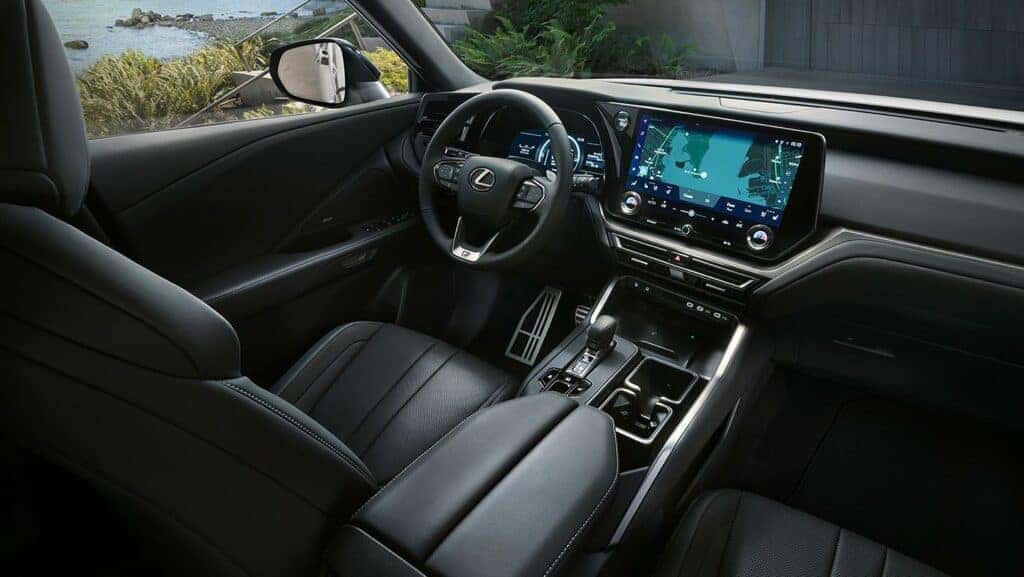
Both models feature a luxurious interior with all the expected features. Both seat 7 but that can be reduced to six with second-row captain’s chairs. Both are equipped with wireless phone compatibility and charging, standard leatherette and optional leather, standard heated front seats, available cooled front seats, and so on. There are some differences such as the MDX having a standard sunroof and the TX having standard built-in navigation. Likely, the personal taste of the different aesthetics will probably make the biggest difference to the shopper. The TX does boast a larger center touchscreen at 14 inches to the 12.3 of the MDX. Both vehicles offer a standard suite of safety and driver assistance technologies.
TX Emerges on Top
Overall, the TX emerges as the better product. It has a higher starting price, but things overlap as you climb the model hierarchy. Most of all, a three-row-SUV is all about providing room for passengers and cargo and the TX simply has more of it. At the same time, it provides more torque while providing greater fuel economy, with the TX500h hybrid models doubling down on both. If a luxury 3-row SUV appears to be the ideal vehicle to accommodate your lifestyle, visit us today at Lexus of Las Vegas to check out this newest addition to their product line.